
Cost of Living in Portugal in 2026: What Does It Really Cost to Live Here?
Is Portugal still an affordable place to live in 2026? It's one of the questions we're asked most frequently by people considering a move here, and unfortunately, there's no straightforward answer. Whilst Portugal can still offer a very good quality of life for your money, the idea that you can move here and automatically halve your living expenses is becoming increasingly unrealistic, particularly if you're looking for a modern, comfortable property in a popular town or city.
We're Shelley and Gary, and having made the move to Portugal ourselves, we're very aware of how important it is to understand the real costs before making such a significant life decision. Through our work at Your Casa Key, helping people find homes and settle into life in Portugal, we also see what newcomers are actually paying for accommodation and how their expectations compare with what's available.
One of the reasons we've started sharing our monthly cost of living on our Change of Plan YouTube channel is that we wanted to provide something a little more useful than the typical annual breakdown. Living expenses don't remain the same throughout the year, and looking at a single month's spending without understanding what happened during that month can give a very misleading impression of what life in Portugal really costs.
Housing: Your Biggest Financial Decision
For most people relocating to Portugal, accommodation will be their largest monthly expense, and this is where we think some of the information circulating online is particularly unrealistic. You'll still find articles suggesting that you can rent a lovely apartment in Portugal for €600 or €700 a month, and whilst cheaper properties do exist, they're not necessarily in locations where people want to live, nor are they always the standard of accommodation our clients are looking for.
Most people approaching us want a modern apartment with decent insulation, double glazing, air conditioning or effective heating, and a comfortable standard of living throughout the year. Having lived through Portuguese winters ourselves, we completely understand why these things matter, because an inexpensive apartment that turns out to be cold, damp and expensive to heat can quickly lose its appeal.
Based on the rental properties we've been helping clients find, a realistic monthly budget for a modern apartment in places such as Aveiro and Coimbra is often around €1,250, whilst Porto is more likely to be approximately €1,250–€1,350. In Braga, we'd suggest allowing around €1,200–€1,300, with Tavira generally closer to €1,250–€1,400 and Caldas da Rainha potentially offering options around €1,000–€1,200.
These aren't the cheapest advertised rents in each location, nor are they guarantees of what you'll find at any given time. They're practical budgeting figures based on the type of accommodation many of our relocating clients actually want, and individual prices will depend on the property, neighbourhood, condition and availability.
Of course, if you're purchasing a property outright or already own your home, your monthly housing expenses will look very different, which is one reason why comparing one person's cost of living with another's can be so misleading.
Groceries: Portugal Isn't Always Cheaper Than You Expect
Food shopping is another area where expectations don't always match reality, particularly for people moving from the UK. Portugal has some excellent supermarkets, including Continente, Pingo Doce, Lidl and Aldi, and there's a wonderful selection of local produce, but not everything is inexpensive.
Some seasonal fruit and vegetables can represent excellent value, whilst imported foods, familiar British brands and certain household products can be surprisingly expensive. Much also depends on how you like to eat, whether you cook most meals from scratch, how much meat you buy and whether you prefer branded products.
We regularly share our actual supermarket spending in our monthly videos because we think it's far more useful to see what a real household spends than to be given an arbitrary grocery budget. We're not trying to demonstrate the cheapest possible way for two people to eat in Portugal; we're simply showing what our normal lifestyle costs, including those months when we spend more than we'd perhaps anticipated.
And that's an important distinction, because whilst one couple might comfortably spend €300 a month on groceries, another could spend considerably more without necessarily living extravagantly.
Electricity, Water and Household Bills
Portugal's relatively mild climate can lead people to assume that heating and cooling costs will be minimal, but that isn't necessarily the case. Many properties, particularly older ones, don't have the insulation or central heating systems that people from northern Europe are accustomed to, and keeping a home comfortable through the winter can be surprisingly expensive.
Air conditioning is common in modern Portuguese properties and can provide both heating and cooling, although the cost of running it will depend on the efficiency of the equipment, the property itself and your electricity tariff.
One thing we've learnt is that it's worth regularly reviewing your energy supplier rather than assuming the company you originally chose is still offering the best deal. We recently switched back to EDP from Gold Energy after previously making the move in the opposite direction, simply because the available tariffs had changed. We also take advantage of a cheaper night electricity tariff, which can be useful for households able to shift some of their electricity consumption into off-peak hours.
Water bills will depend on your municipality and usage, whilst internet and mobile phone packages vary according to the provider, speed and services included. It's also worth remembering that some contracts, particularly telecommunications packages, may have minimum commitment periods, so comparing the complete cost and contractual terms is important.
Transport: Do You Need a Car?
Whether you need a car will depend enormously on where you choose to live. In the centres of larger cities such as Porto and Lisbon, public transport can make it perfectly possible to manage without one, whilst in smaller towns and rural areas, having your own transport may be much more important.
This is something we'd encourage anyone considering a move to Portugal to think about carefully, particularly if you're attracted to rural living because of the lower property prices. A beautiful house in the countryside might appear to represent excellent value, but if you need two cars to manage everyday life, your overall costs could be significantly higher than anticipated.
Cars can also be expensive to purchase in Portugal, so remember to budget for insurance, road tax (IUC), servicing, tyres, fuel and motorway tolls. When we bought our own car, we managed to save approximately €12,000 by asking the dealership whether they had a suitable showroom or demonstration vehicle available, which demonstrates that it's always worth exploring alternatives before paying the full price for a new vehicle.
Eating Out and Enjoying Life in Portugal
Eating out can still be relatively affordable in Portugal, particularly if you enjoy traditional Portuguese restaurants and local cafés, but prices vary enormously depending on where you live and the type of establishments you visit. A simple weekday lunch in a smaller town is a very different proposition from an evening meal in a fashionable restaurant in central Lisbon or a busy Algarve resort.
And whilst it's perfectly possible to enjoy Portugal without spending a fortune, we think it's important to include the things that make life enjoyable when calculating your budget. If you love eating out, travelling, visiting friends or exploring different parts of the country, those expenses shouldn't simply disappear from your calculations because you're moving abroad.
We've always believed that the purpose of relocating should be to create a lifestyle you enjoy, rather than constantly trying to live as cheaply as possible, and that's why our own monthly spending includes the things we genuinely do rather than an artificially restricted budget.
Why We Share Our Monthly Cost of Living
One of the biggest problems with cost of living information is that figures are frequently presented without enough context. You might see a couple claiming they live comfortably in Portugal for €1,500 a month, but do they own their property outright? Are they including healthcare, insurance and vehicle expenses? Do they travel regularly or eat out? And are they accounting for annual expenses, or simply showing what they spent during one particularly inexpensive month?
All of these things make an enormous difference, which is why we've decided to share our actual expenses every month on Change of Plan. Some months are naturally more expensive because we've had visitors, been travelling or had additional household costs, whilst others are much quieter. By following our spending over a full year, viewers can see how the figures fluctuate and gain a more realistic understanding of what a particular lifestyle costs.
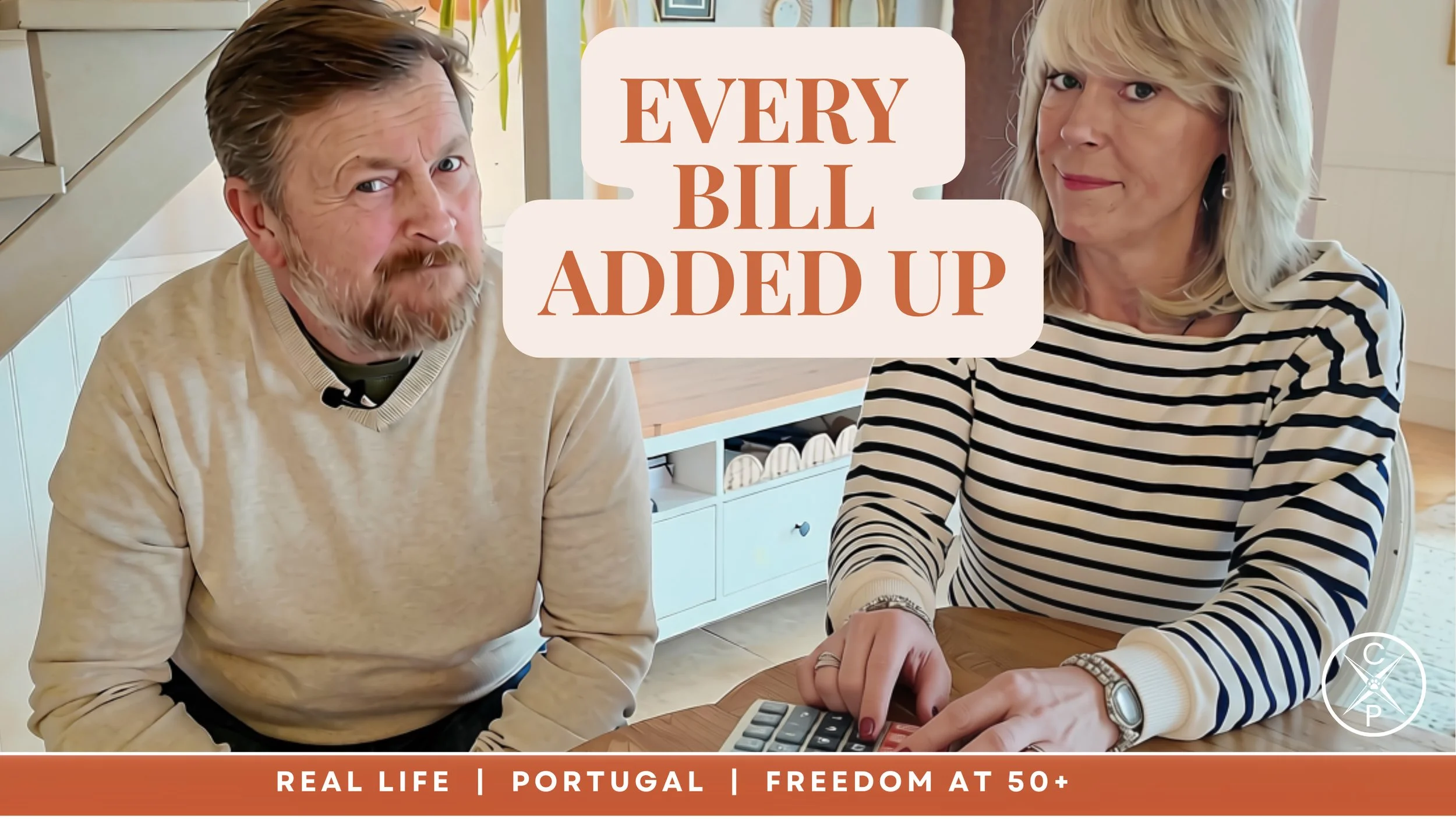
In our September cost of living video, we go through our actual household spending and explain the circumstances behind the numbers, including those expenses that might not be typical of every month.
Watch our September cost of living breakdown here:
So, How Much Should You Budget to Live in Portugal?
The honest answer is that your budget needs to reflect the lifestyle you want, rather than somebody else's idea of what constitutes affordable living. A couple renting a modern apartment in Porto will have a very different budget from a retired couple living mortgage-free in a small rural village, and neither situation provides a particularly useful benchmark for the other.
We'd always recommend starting with accommodation, because that will probably have the greatest impact on your monthly expenses, and then building a realistic budget around your particular needs. Include utilities, groceries, transport, insurance, healthcare, eating out and leisure activities, but don't forget the less regular costs such as car servicing, property maintenance, travel and unexpected expenses.
It's also worth allowing some flexibility, particularly during your first year, when there may be additional settling-in costs and you won't yet have a clear picture of your annual spending.
Portugal can still offer a wonderful quality of life, and for many people it remains an attractive place to relocate, but we think it's far better to arrive with realistic expectations than to discover that the lifestyle you imagined costs considerably more than you'd been led to believe.
For us, the real question isn't simply whether Portugal is cheap, but whether the quality of life you can create here represents good value for the money you're spending.
And that's something only you can decide.
Thinking About Moving to Portugal?
At Your Casa Key, we help people navigate the practical side of relocating to Portugal, from understanding different locations and finding suitable rental properties to purchasing a home and settling into everyday life.
If you're still researching your move, we also share practical advice, local insights and our own experiences in our free weekly Portugal newsletter, helping you make informed decisions about what life here is really like.
Sign up for our free weekly Portugal newsletter
Shelley & Gary
Your Casa Key | Change of Plan
